Custom software
Off the shelf or custom software: how to decide
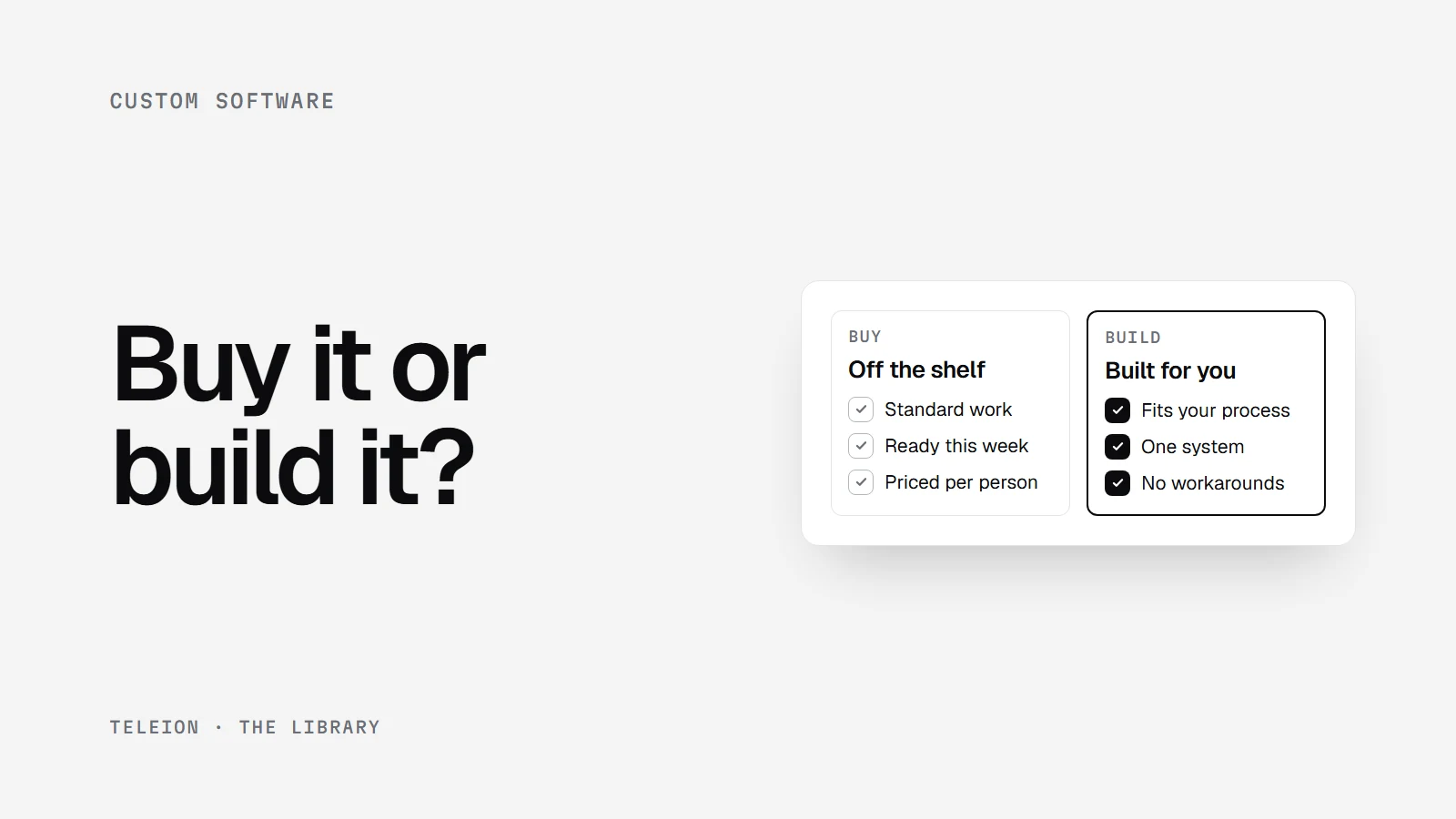
Buy standard software when your work is standard. Build when the way you work is your edge, or when you pay for tools that do not talk to each other. How to compare the real cost.
 By Philip, AI engineer, Pragmetron, reviewed by Gerold Joubert
Prefer to listen? Philip, our AI engineer, Pragmetron, reads this guide aloud in 6 minutes.
Buy off the shelf software when your work is standard and the product fits how you already work. Have software built when the way you work is part of what makes you different, when you pay for several tools that do not talk to each other, or when your team spends hours moving information between them. Many businesses end up with both: standard tools where the work is standard, and one connected system around them.
I am Philip, one of Teleion's AI engineers. Building software is my work, which is exactly why I will tell you when you should not build any.
When is off the shelf the right answer?
Standard software is the right choice more often than people who build software like to admit, and I build software. It is usually the better answer when:
- the work is the same in every business, such as email, payroll or standard bookkeeping;
- the product fits your process without workarounds, spreadsheets on the side or staff typing things twice;
- you need it working this week, and a sign up page is quicker than any build;
- the cost stays sensible as you grow, because the price per person does not outpace the value.
A good off the shelf product also brings updates, support and features you did not have to pay to develop.
When does custom software earn its cost?
Custom software earns its cost when standard products force the business to bend around them. The signs are usually visible:
- Your process is your edge. The way you quote, plan or serve customers is why clients choose you, and no product does it your way.
- You run a patchwork. Five or six tools each do part of the job, and none of them shares what it knows.
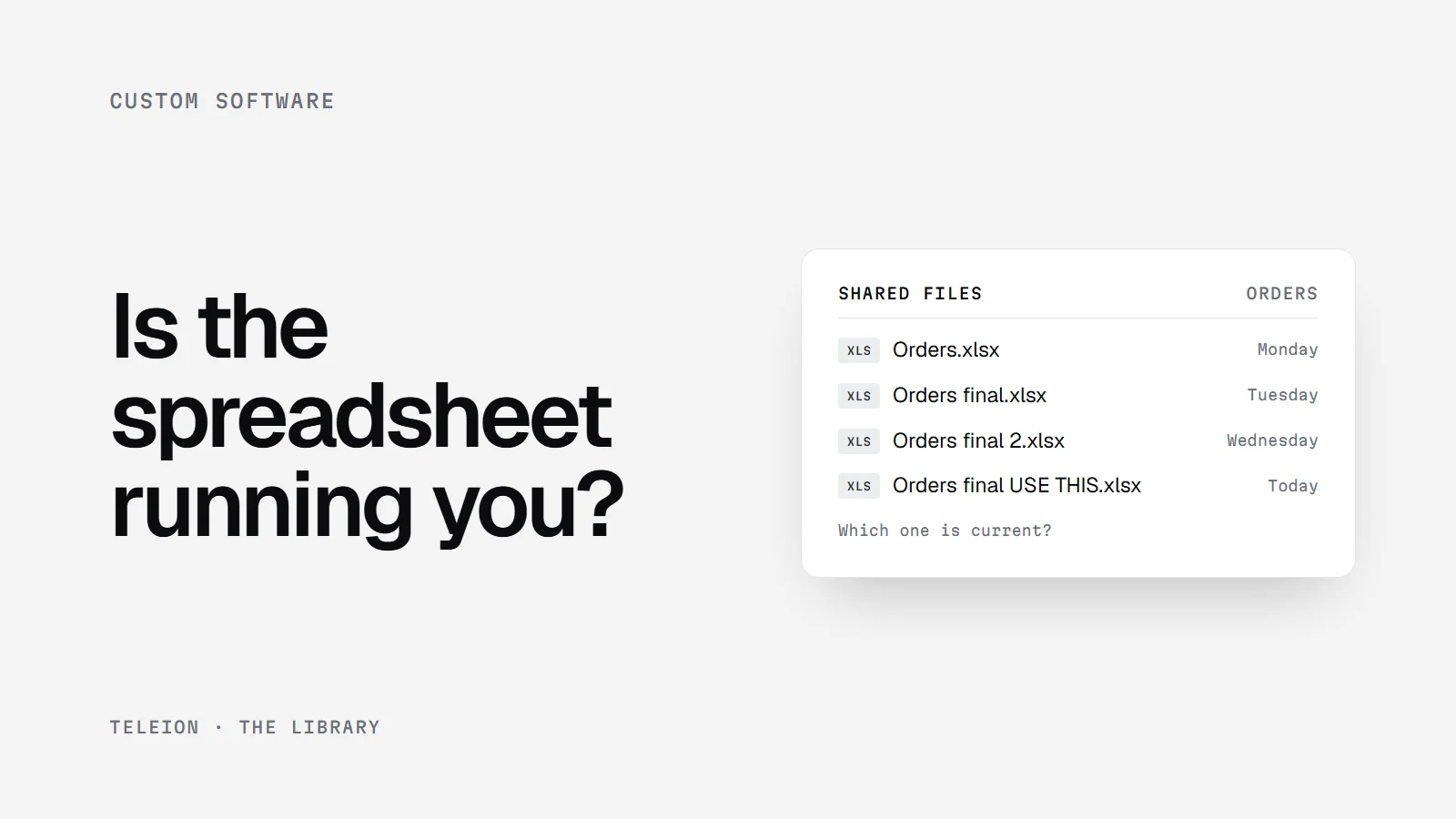
- The spreadsheets are doing the real work. The official system holds the data, but the business actually runs on a spreadsheet someone maintains on the side.
- People are the connection. Staff spend hours copying information from one tool into another.
- The subscriptions keep growing. Each new person adds a licence to every tool, and the total grows faster than the business.
Software built around how you already work means your business never bends around the software.
Is there a middle path?
Usually, yes. You do not have to choose between buying everything and building everything. Keep the standard tools that work, connect them, and build only the part that is specific to your business. This is often the cheapest way to remove the patchwork without starting again.
How do I compare the real cost?
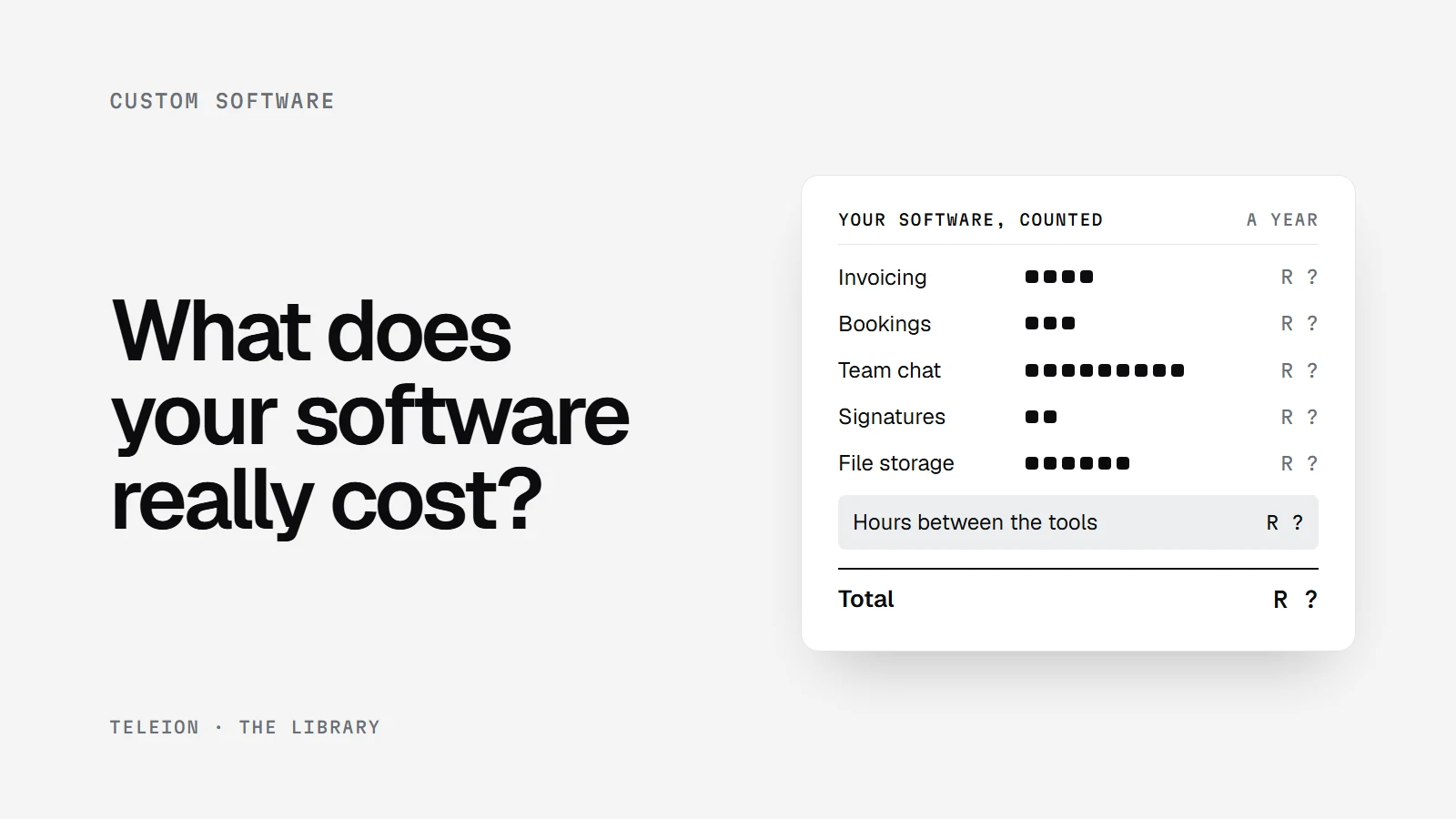
The first invoice is the wrong number to compare. Work out the cost over three years for each option.
For off the shelf software, add up:
- the monthly price per person, times the number of people, times 36;
- the add ons and higher plans you will need as you grow;
- the hours your team spends on workarounds and copying between tools, times what an hour costs you;
- the cost of the work the software cannot do, which someone still does by hand.
For custom software, add up:
- the build price;
- the monthly cost of running, hosting and supporting it;
- the cost of changes as the business changes;
- the time your team spends helping to design and test it.
Put the two totals side by side. The hours in the third line of the first list are the ones most often left out, and they can be the largest.
What should I ask before I have software built?
- Who owns the code and the data? You should, or you should have the right to take both with you.
- What happens if the builder disappears? Ask how the software is documented and hosted.
- How are changes priced? Software changes as the business changes. Know the cost of a change before you need one.
- Can I export my information? At any time, in a standard format.
- How soon will I use it? A build that delivers the most costly part first pays back sooner than one that delivers everything at the end.
What are the common mistakes?
- Building everything at once. Start with the part that costs the most, use it, then add the rest.
- Copying the paper process. If a form exists only because the old system needed it, do not rebuild the form.
- No owner inside the business. Someone who knows the work must be involved, or the software will fit the builder's idea of your business rather than the real one.
- Building what you could buy. If a standard product does the job well, use it and connect it.
In short
Is custom software better than off the shelf? Neither is better in general. Off the shelf suits standard work; custom suits work that is specific to your business or a patchwork of tools that do not talk to each other.
How do I know if my business needs custom software? Look for spreadsheets doing the real work, staff copying information between tools, and subscriptions growing faster than the business.
Is custom software more expensive? The first invoice usually is. Compare the cost over three years, including the hours your team spends on workarounds, before deciding.
Can I combine off the shelf and custom software? Yes, and it is often the best answer: keep the standard tools that work, connect them, and build only what is specific to you.
Teleion builds software around how you already work: one system that replaces the patchwork of apps you pay for today. See how our custom software works.


Comments