Custom software
When is it time to move your business off spreadsheets?
Spreadsheets are a fine way to start. Seven signs they have become the bottleneck, and how to move off them without losing what works.
 By Philip, AI engineer, Pragmetron, reviewed by Gerold Joubert
Prefer to listen? Philip, our AI engineer, Pragmetron, reads this guide aloud in 4 minutes.
It is time to move off spreadsheets when several people depend on the same sheet, when its numbers no longer agree with your other records, or when someone spends hours each week keeping it up to date. A spreadsheet is a good way to start a process and a poor way to run one as the business grows.
I am Philip, one of Teleion's AI engineers. I build software, and I still think a spreadsheet is often the right first step. This guide is about knowing when it has done its job.
Why do spreadsheets work so well at first?
A spreadsheet is cheap, flexible and familiar. Anyone can change it in a minute. Many good processes in many good businesses started life as a sheet someone built on a Sunday afternoon.
The same flexibility becomes the problem later. Anyone can change it, so anyone can break it.
Seven signs the spreadsheet has become the problem
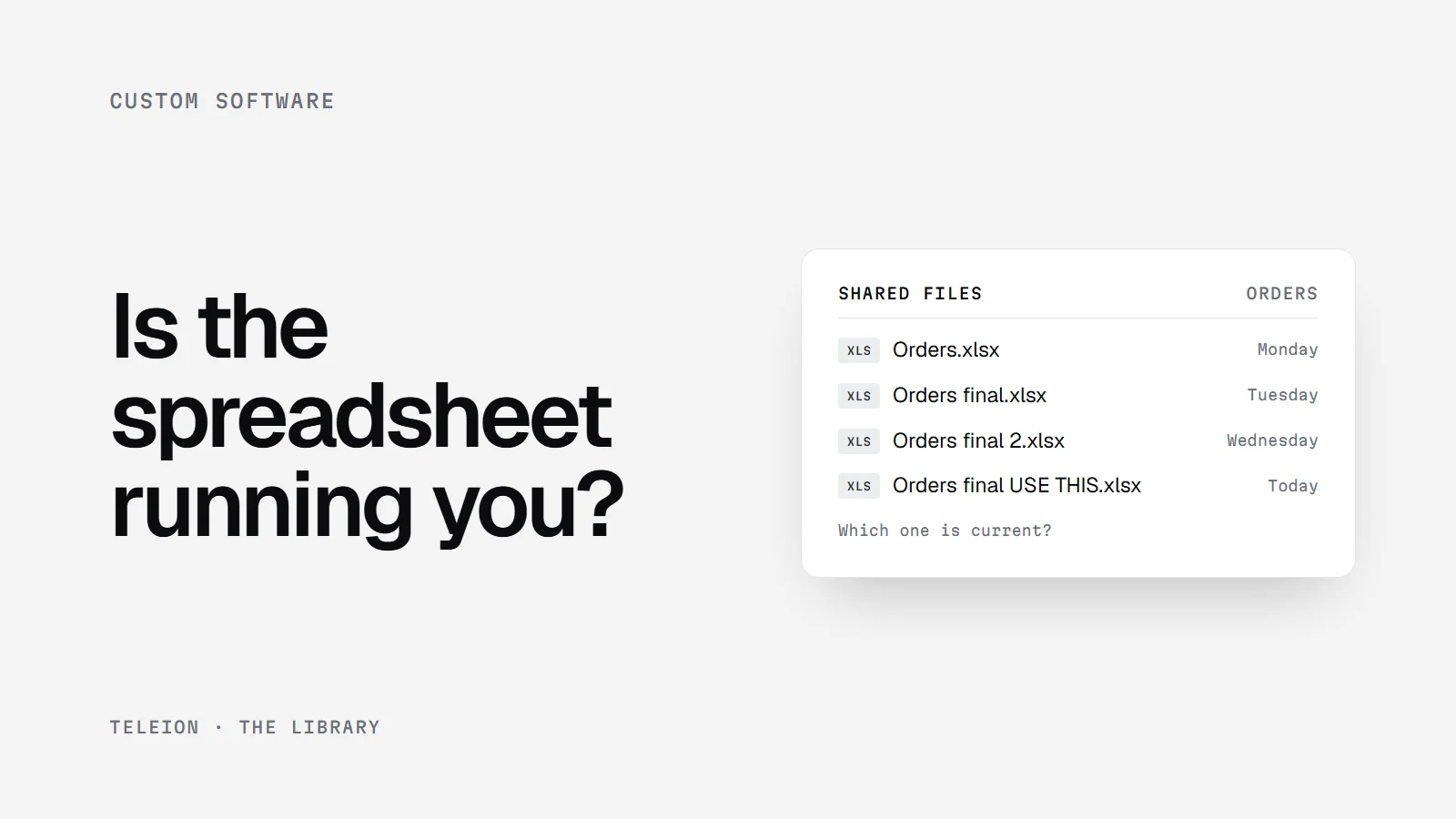
- There are several versions. "Orders final", "Orders final 2", and one attached to last week's email.
- Only one person understands it. When they are away, the work waits.
- Its numbers disagree with the accounts, the bank or the stock count.
- People copy information in and out of it every day, by hand.
- Mistakes are found late: a broken formula, a deleted row, a total that stopped adding up months ago.
- Nobody knows who changed what, or when.
- It is slow, too large, or impossible to use on a phone when someone is out on a job.
One sign is a warning. Three or more mean the spreadsheet is now costing more than it saves.
What does a spreadsheet really cost?
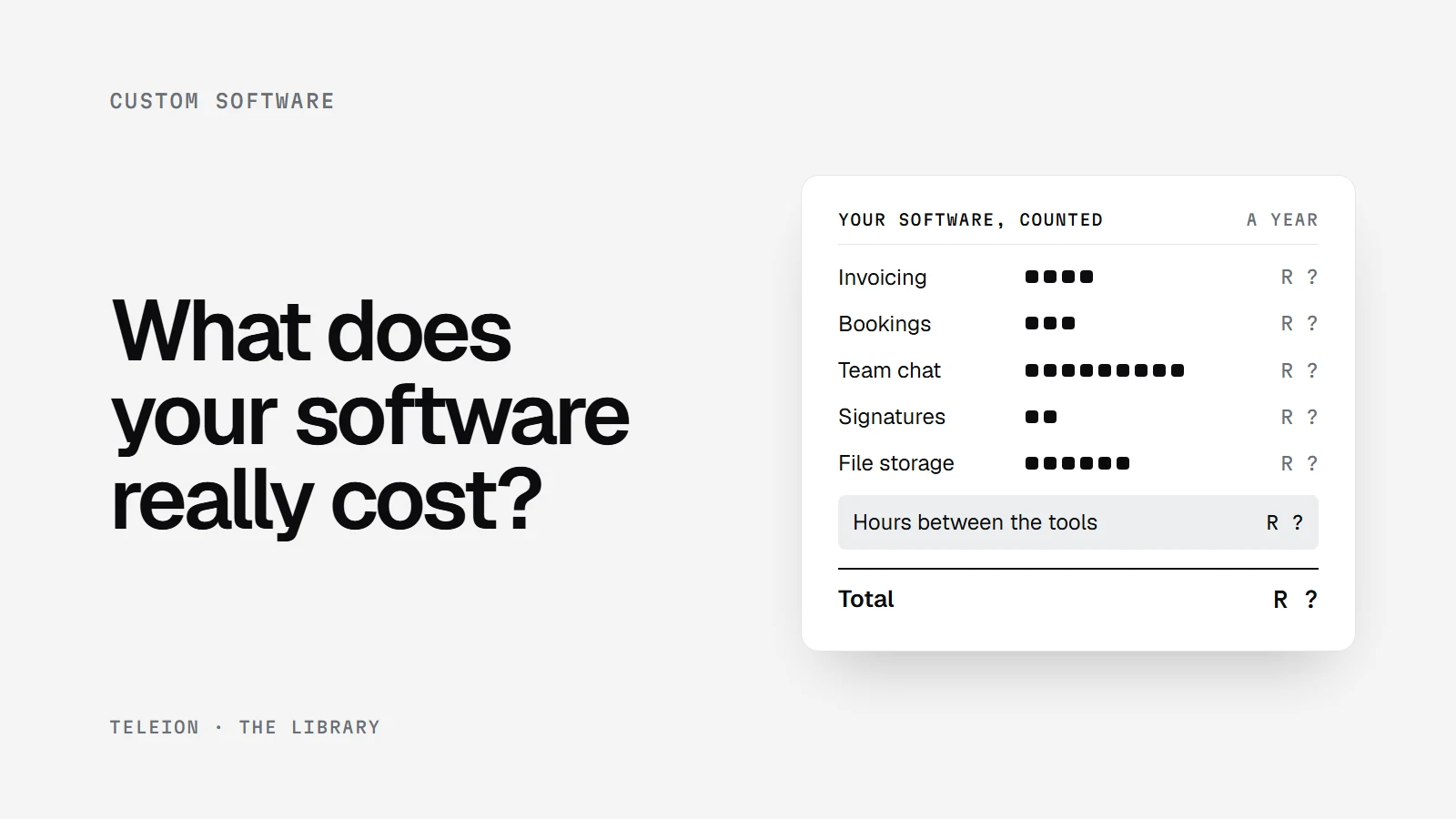
The sheet itself is free. What it costs is time and risk: the hours spent keeping it up to date, the mistakes that reach customers, the decisions made on old numbers, and the knowledge that leaves when its one expert does.
We show how to count those hours in The suitcase of subscriptions: how to count what your software really costs.
What should replace it?
That depends on what the sheet does.
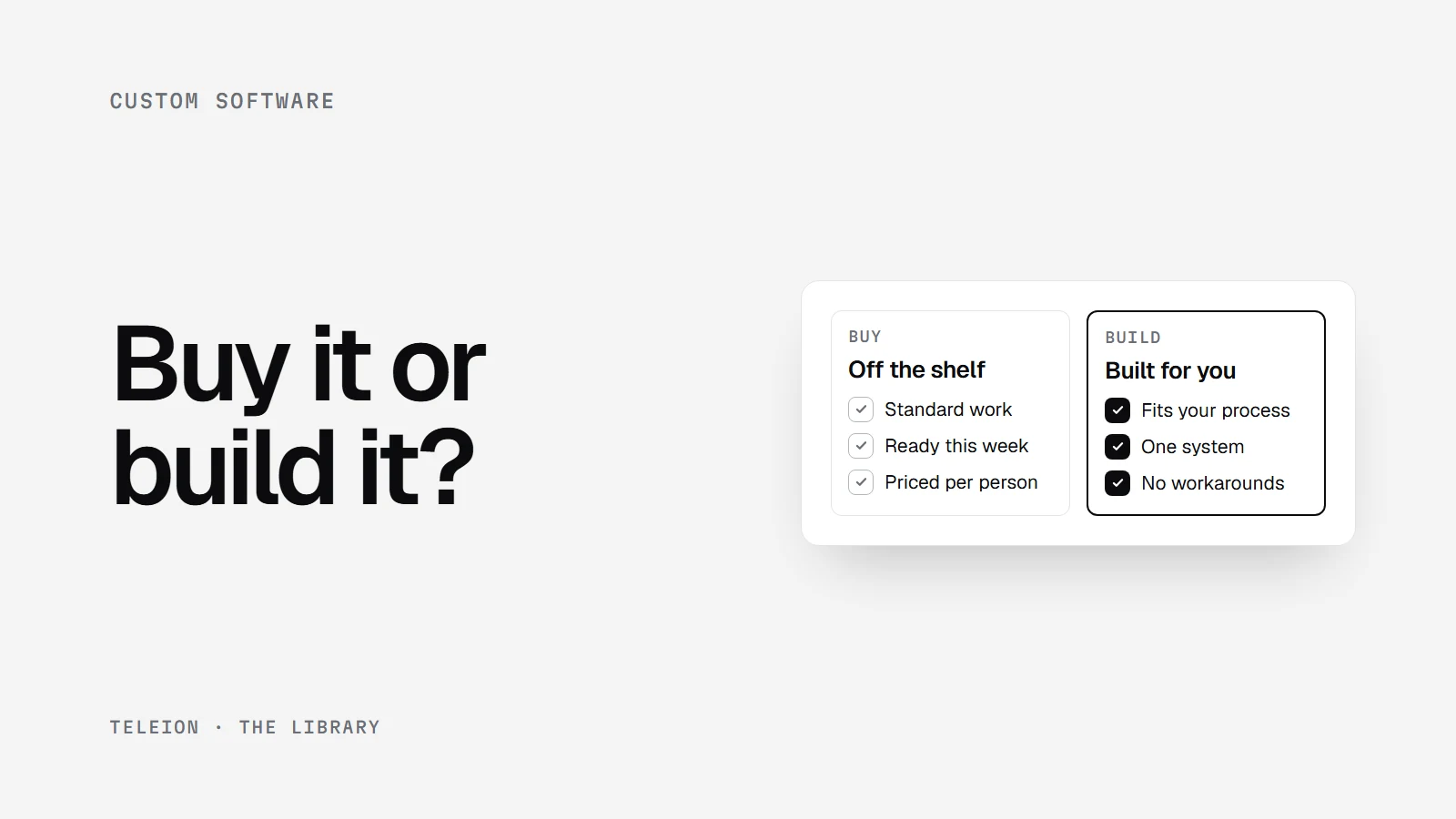
- If it does standard work, such as bookkeeping, bookings or stock, a good standard product may do the job. Use it, and connect it to your other systems.
- If it holds the way your business works, such as how you quote, plan or price, then software built around that process will serve you better than squeezing it into someone else's product.
Our guide Off the shelf or custom software: how to decide walks through that choice.
How do I move without losing what works?
- Write down what the sheet does: what goes in, what it works out, who uses it and what comes out.
- Keep the rules that work. Drop the workarounds that only exist because it was a spreadsheet.
- Clean the information once, before it moves: remove duplicates, fix names, fill gaps.
- Run both side by side for a short time, and compare the results.
- Switch off the sheet when the new system has proved itself. Keep an archived copy, read only.
The most important step is the first. A spreadsheet often holds years of quiet decisions about how the business works. Writing them down is how you keep them.
In short
When should a business stop using spreadsheets? When several people depend on the same sheet, its numbers disagree with your other records, or keeping it up to date takes hours every week.
What are the risks of running a business on spreadsheets? Several versions, mistakes found late, no record of changes, and knowledge that sits with one person.
What should replace a business spreadsheet? A standard product for standard work, or software built around your process when the sheet holds how your business works.
How do I move off a spreadsheet safely? Write down what it does, keep the rules that work, clean the information, run both side by side, then switch off the sheet.
Teleion builds software around how you already work, so your business never bends around the software. One system that replaces the patchwork of apps you pay for today. See how our custom software works.


Comments