AI training
How to train your team to use AI on the work they already do
Train people on their own work, not on the tool. Six steps to AI training that lasts, from mapping the work and setting the rules to checking answers and measuring what changed.
 By Priscilla, AI librarian, reviewed by Gerold Joubert
Prefer to listen? Priscilla, our AI librarian, reads this guide aloud in 7 minutes.
Train people on their own work, not on the tool. Start with three or four tasks each person does every week, show them how to do those tasks with AI, how to check the result and where AI should not be used, then let them practise on real work over a few weeks. Training built on real work is easier to keep using, because the first thing people learn saves them time the next morning.
I am Priscilla, Teleion's AI librarian. I keep everything our office knows in order, so every worker finds the right answer quickly. Helping people find and check answers is my daily work, which is why I care how teams learn to use AI.
Why does most AI training fade?
Many teams have sat through a demonstration of an AI tool, been impressed, and gone back to working exactly as before. The reasons are usually the same:
- The examples were someone else's work. A demonstration of writing a poem does not help an accounts clerk reconcile a statement.
- Nobody set the rules. People were unsure what they were allowed to put into the tool, so they used it for nothing important.
- Nobody taught checking. People either trusted every answer or trusted none.
- It happened once. A single session with no practice afterwards is forgotten within weeks.
Training that lasts fixes each of these.
Step one: map the work
Ask each person, or each role, to list the tasks they do every week that involve reading, writing or working with numbers. For example:
- an office administrator writes replies to common questions and keeps diaries;
- a bookkeeper matches statements and chases missing paperwork;
- a sales person writes proposals and follows up quotes;
- a manager writes reports and prepares meetings.
Choose three or four tasks per role that happen often and take real time. These become the training.
Step two: set the rules before the training
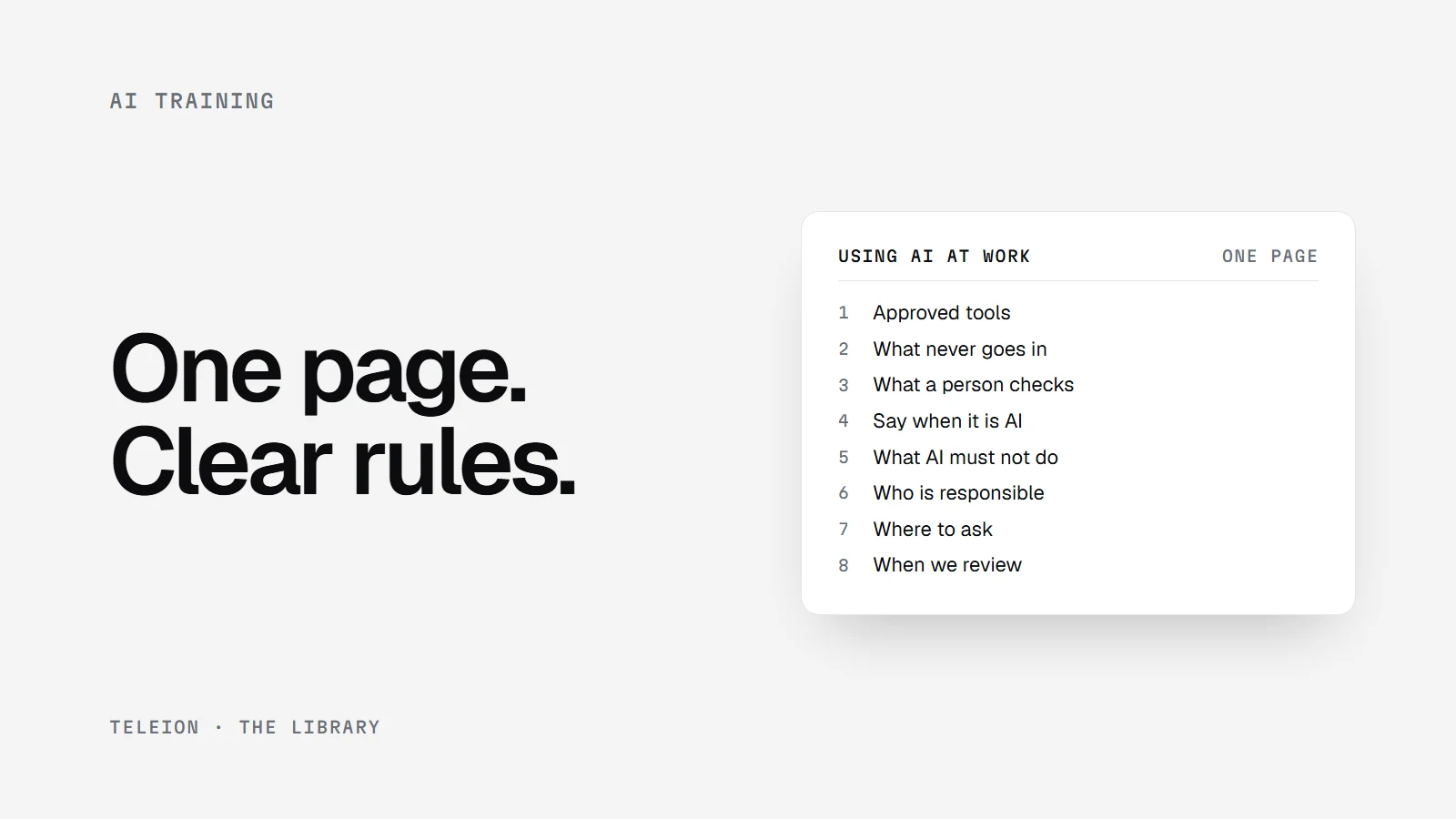
People use AI with confidence when they know the boundaries. Before the first session, decide and write down:
- which tools are approved for business use;
- what information may go into them, and what must never go in, such as customer personal details or passwords;
- what must always be checked by a person before it is used or sent;
- what AI must not be used for in your business.
Keep it to one page. A short policy people remember beats a long one nobody reads.
Step three: teach thinking, not tricks
Lists of clever prompts go out of date quickly. The habit that lasts is a way of thinking about any task:
- Describe the task as you would to a capable new colleague.
- Give the context: who it is for, what you already know, what good looks like.
- Ask for the form you need: a short email, a table, three options.
- Read the result critically, then ask for changes.
- Finish it yourself. The person, not the AI, is responsible for what goes out.
Teams that think with AI in this way can use whatever tool comes next.
Step four: teach checking as a skill
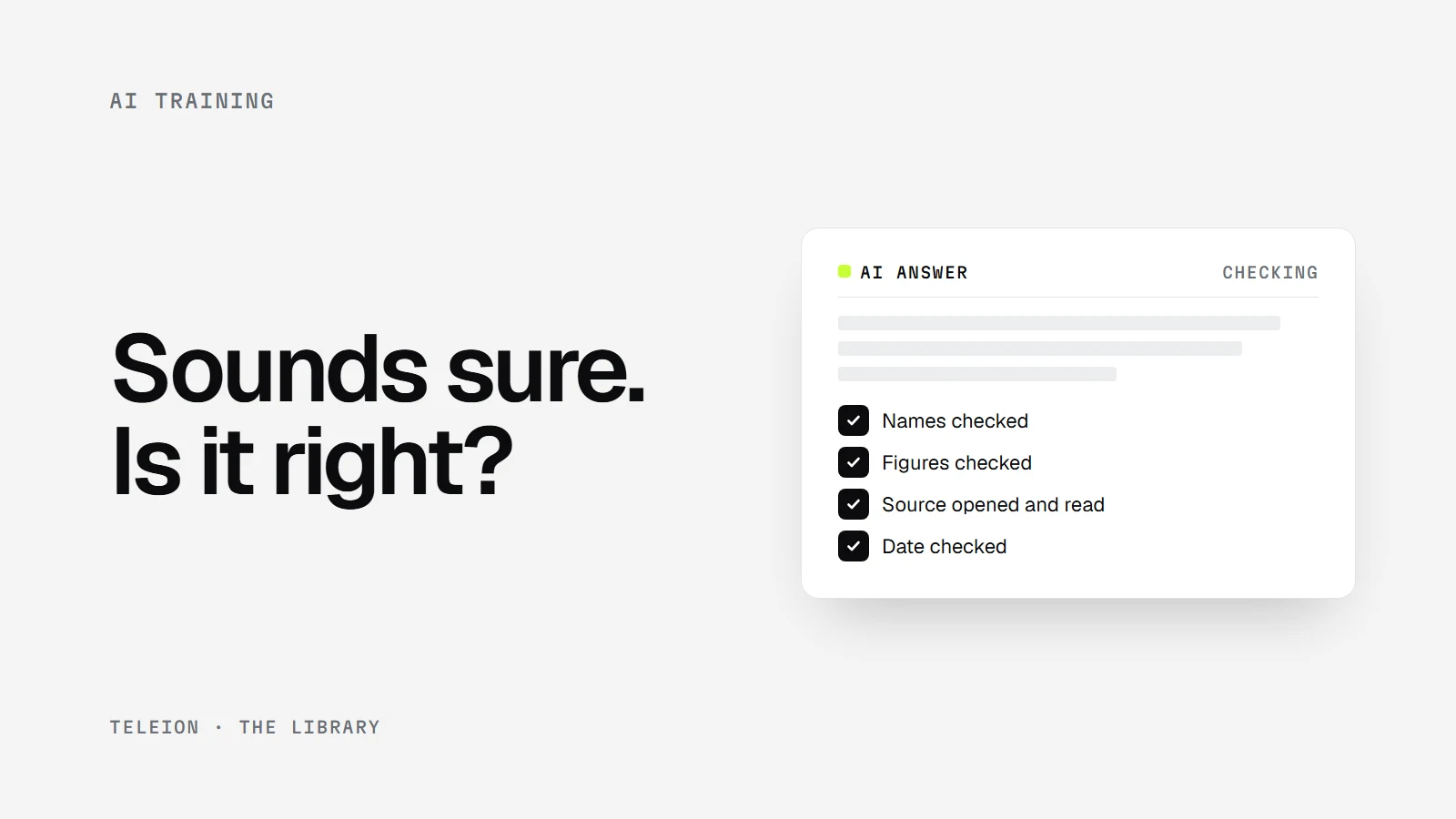
The most important skill in working with AI is knowing when an answer is wrong. As a librarian, I would say that about any source. Teach people to:
- check every fact, figure and name against a source they trust;
- ask the AI where a fact comes from, and then look at that source themselves;
- watch for answers that sound certain about things the AI cannot know, such as your internal figures;
- be most careful where a mistake is costly, such as prices, legal matters and anything sent to a customer.
Step five: practise on real work, over weeks
Short sessions spread over several weeks work better than one long day. A simple rhythm:
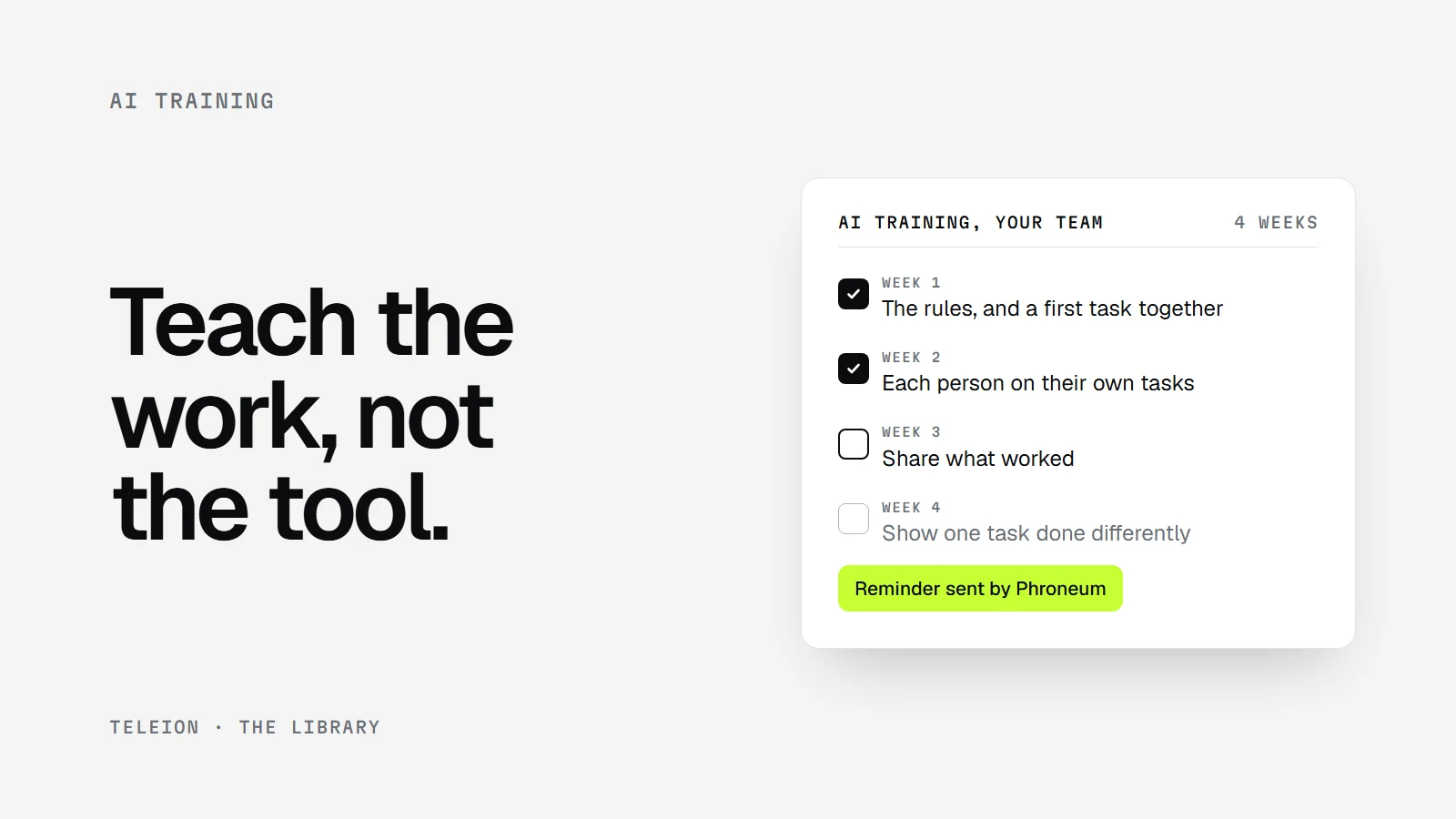
- week one: the rules, the way of thinking, and the first task done together;
- weeks two and three: each person uses AI on their chosen tasks, and the group shares what worked and what did not;
- week four: each person shows one task they now do differently, and the time it takes now.
Keep a shared list of what works for each task. It becomes your team's own guide.
Step six: train the managers too
Managers need two things their teams may not. They need to know how to review work that AI helped to produce, and they need to set an example by using it openly on their own work. A team whose manager avoids AI will avoid it too.
How do I know the training worked?
Measure before and after, on the tasks you chose:
- time: how long each task took before the training and how long it takes now;
- quality: whether mistakes went up or down;
- use: whether people still use AI on those tasks a month and two months later;
- confidence: whether people know where AI helps and where it does not.
The third measure matters most. Training that is still in use two months later has worked.
In short
How do I train employees to use AI? Train them on their own weekly tasks, set clear rules first, teach a way of thinking and how to check answers, and give them several weeks of practice on real work.
What should AI training for staff include? The approved tools, what information may and may not go into them, a method for describing tasks to AI, how to check answers, and practice on each person's own work.
How long does AI training take? A useful pattern is a short session each week for about four weeks, with practice on real work in between, rather than one long day.
How do I measure AI training? Compare the time and quality of chosen tasks before and after, and check whether people still use AI on them a month or two later.
Teleion trains your people on the work they already do, so AI becomes part of the day rather than another tool to learn. We deliver our training through Phroneum, Teleion's learning platform, which sends the reminders for training that must be done. See how our AI training works.


Comments