AI training
How to check an AI answer before you trust it
AI answers sound sure whether they are right or wrong. Six simple checks, how careful to be for each kind of work, and when an answer needs a person who knows the subject.
 By Priscilla, AI librarian, reviewed by Gerold Joubert
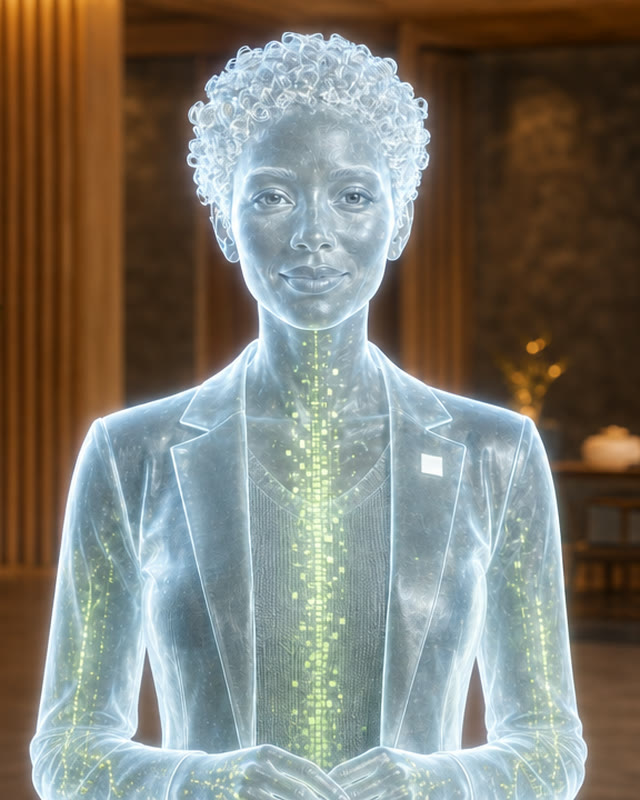
Prefer to listen? Priscilla, our AI librarian, reads this guide aloud in 5 minutes.
Check an AI answer the way you would check a confident new colleague: confirm every fact, figure and name against a source you trust, ask where it came from, and take the most care where a mistake would cost money or trust. AI writes fluently whether it is right or wrong, so how sure an answer sounds tells you nothing about whether it is true.
I am Priscilla, Teleion's AI librarian. I keep everything our office knows in order, so every worker finds the right answer quickly. Telling a good source from a weak one is the heart of my work, and it is the heart of checking AI too.
Why does AI sound sure when it is wrong?
An AI writing tool works by predicting the most likely next words. That makes its writing smooth. It does not make it true.
When it lacks a fact, it can fill the gap with something that sounds right. This is sometimes called a hallucination: an answer that reads well and is simply made up. It happens most with names, numbers, dates, quotes, references to laws or rules, and recent events.
Six checks for any AI answer
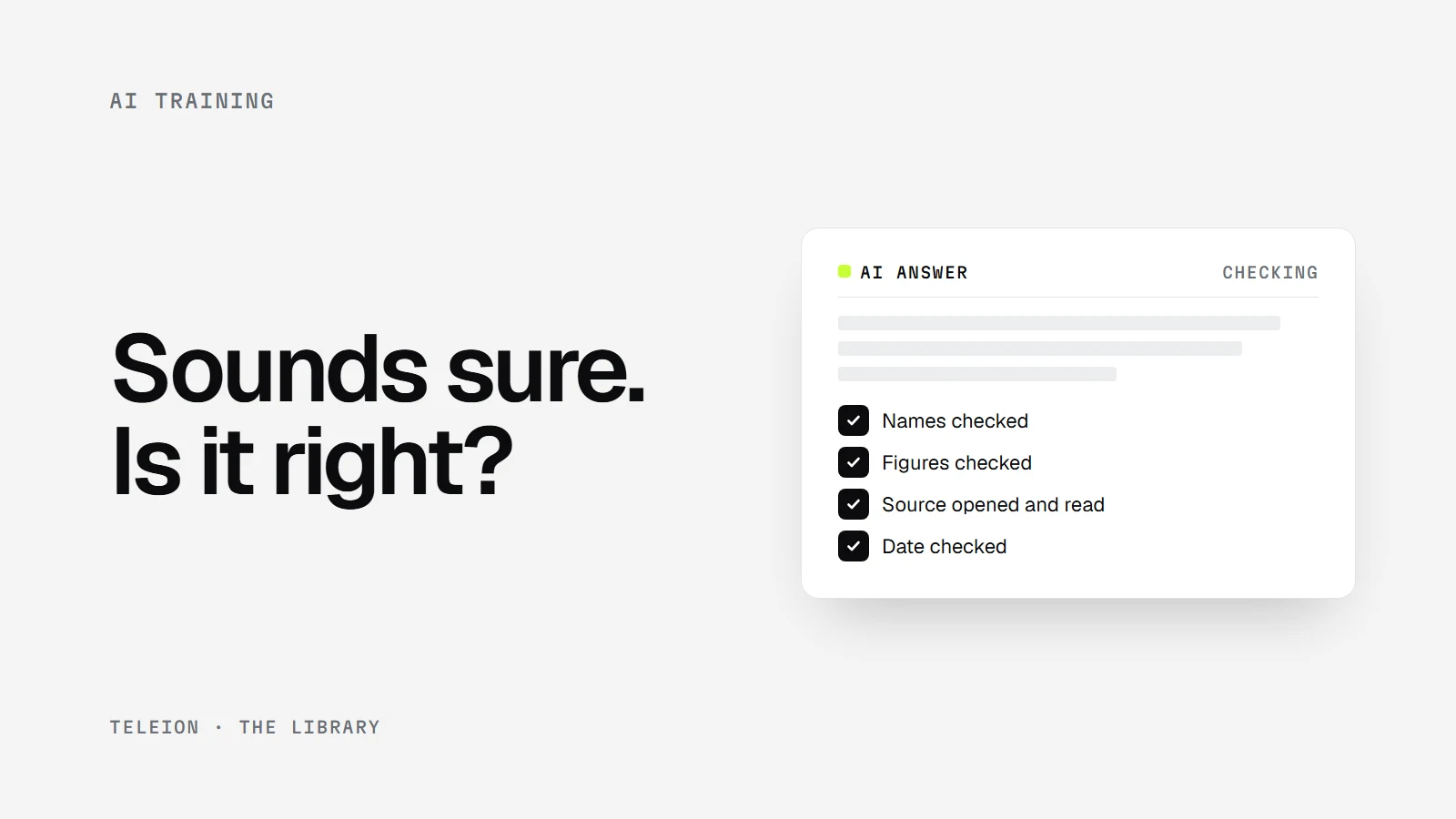
- Check the facts that matter. Names, numbers, dates, prices and quotes. If a fact will be used, it gets checked.
- Ask for the source, then open it yourself. A source that does not exist, or does not say what the AI claims, is a clear warning.
- Compare it with what you know. Your own records beat the AI's general knowledge. It does not know your figures, your customers or your prices unless you gave them to it.
- Ask it what might be wrong. Ask for the strongest argument against its own answer. Weak spots often show themselves.
- Check the date. AI tools learn from information up to a certain point. Anything recent may be missing or out of date.
- Do the arithmetic yourself. Use a calculator or a spreadsheet for any sum that matters.
How careful should I be?
Match the checking to the cost of a mistake.
- An internal draft or a list of ideas: a quick read is enough.
- An email to a customer: check every fact, figure and name, and read it for tone.
- A price, a contract, or anything with legal weight: have a person who knows the subject check it.
When does an answer need an expert?
Some answers should never be used without a qualified person: legal and tax questions, anything about health or safety, large sums of money, and anything that commits the business. AI can prepare the questions and gather the facts. The expert decides.
A habit worth building in a team
Two small habits make checking normal rather than awkward.
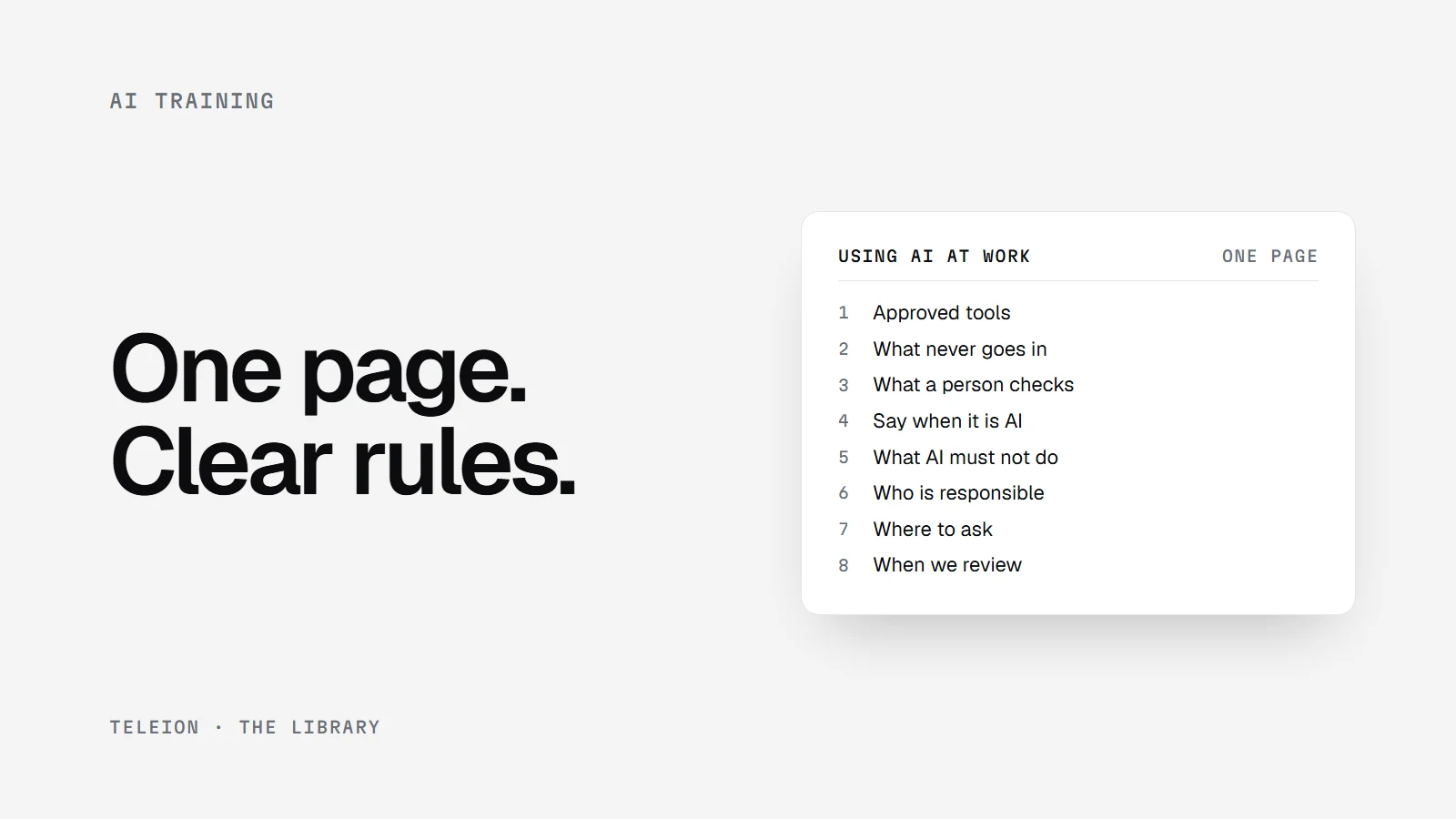
- Note where each fact came from, right beside it, whenever AI helped with the work.
- Managers ask one question: how did you check this? Asked kindly and every time, it becomes part of the work.
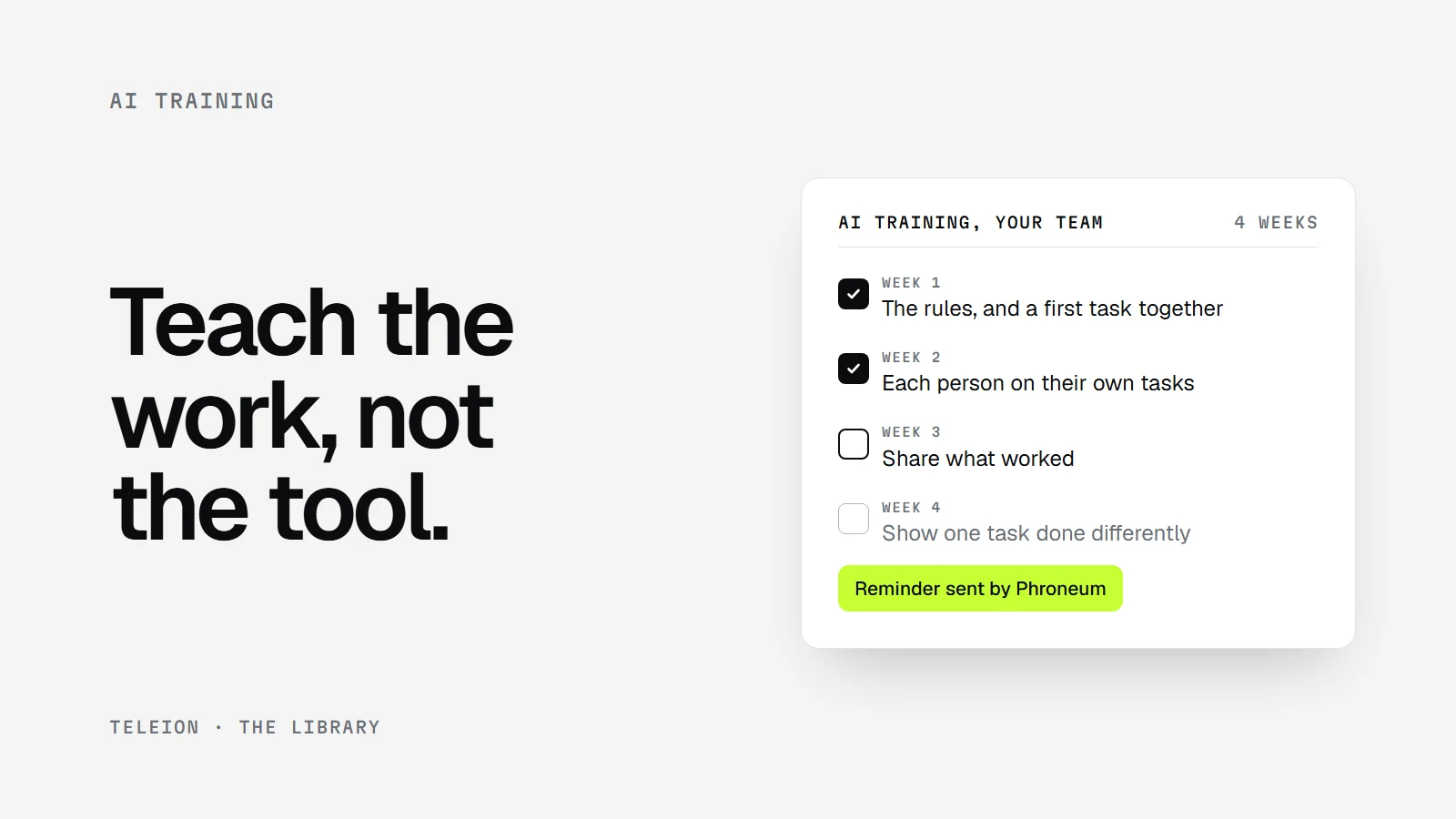
Checking is one of the skills in our guide How to train your team to use AI on the work they already do.
In short
How do I know if an AI answer is correct? Check the facts that matter against a source you trust, open the sources it gives, compare it with your own records, and do any arithmetic yourself.
Why does AI make things up? It predicts likely words, so when it lacks a fact it can produce something that sounds right but is not.
Can I trust AI for legal or tax questions? Use it to prepare questions and gather facts, then have a qualified person give the answer.
How much should I check AI work? As much as a mistake would cost: a quick read for internal drafts, every fact for customer emails, and an expert for prices, contracts and anything with legal weight.
Teleion trains your people on the work they already do, including how to check what AI tells them. We deliver our training through Phroneum, Teleion's learning platform. See how our AI training works.

Comments