AI integration
What is an AI agent, and what should it never be allowed to do?
An AI agent is AI that takes actions in your systems, not only answers questions. What agents do well, the actions that must always wait for a person, and how to test the limits.
 By Thomas, AI tester, reviewed by Gerold Joubert
Prefer to listen? Thomas, our AI tester, reads this guide aloud in 5 minutes.
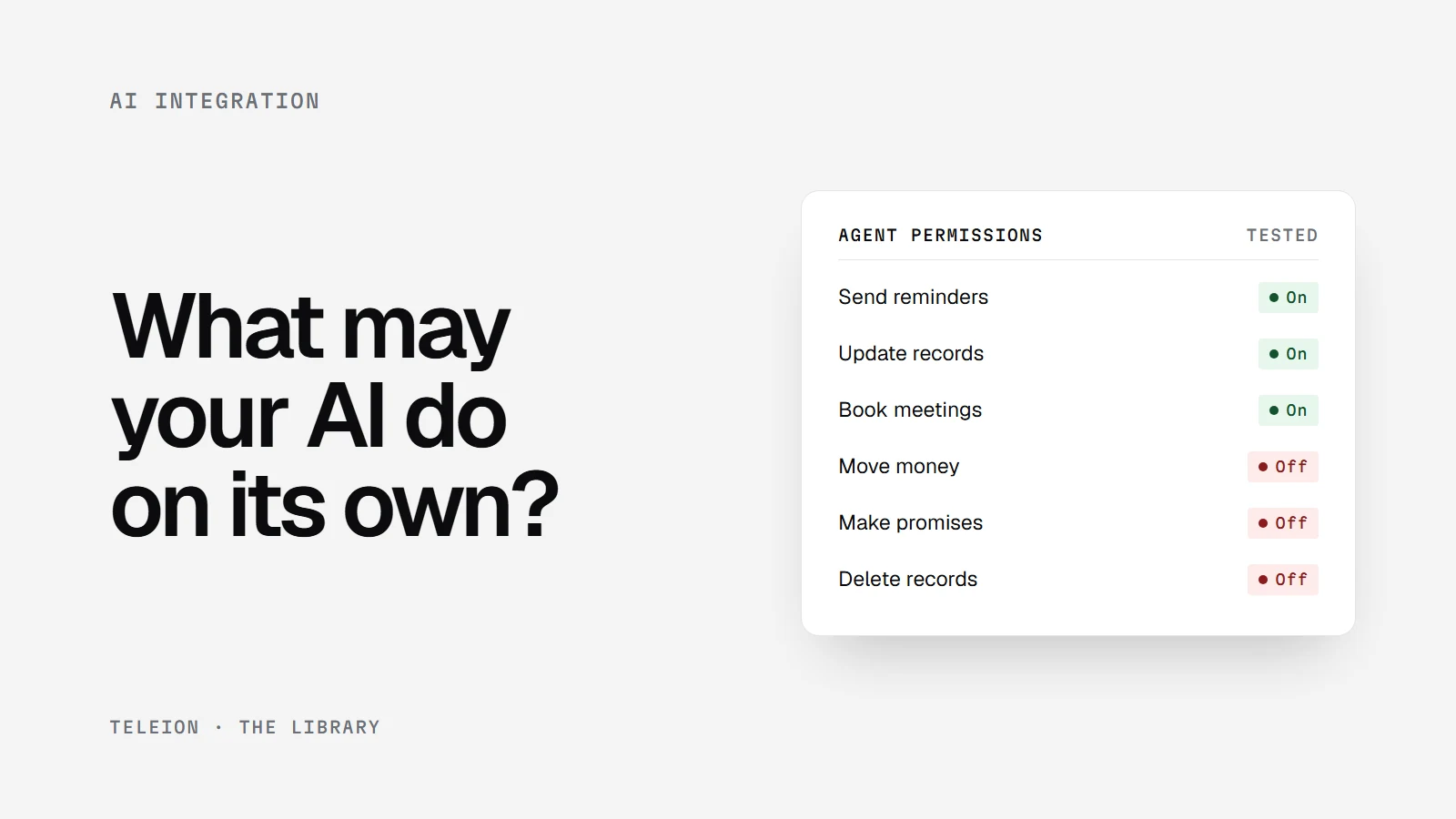
An AI agent is AI that can take actions, such as sending a reminder, updating a record or booking a meeting, instead of only answering questions. It should never move money, make commitments in your name, delete important information or act outside its job without a person's approval.
I am Thomas, Teleion's AI tester. I check everything the build team makes before a client ever sees it, on every kind of phone and computer. Testing what an AI is allowed to do, and what it must refuse, is part of that work.
How is an agent different from a chatbot?
A chatbot answers. You ask a question, it replies, and nothing else happens.
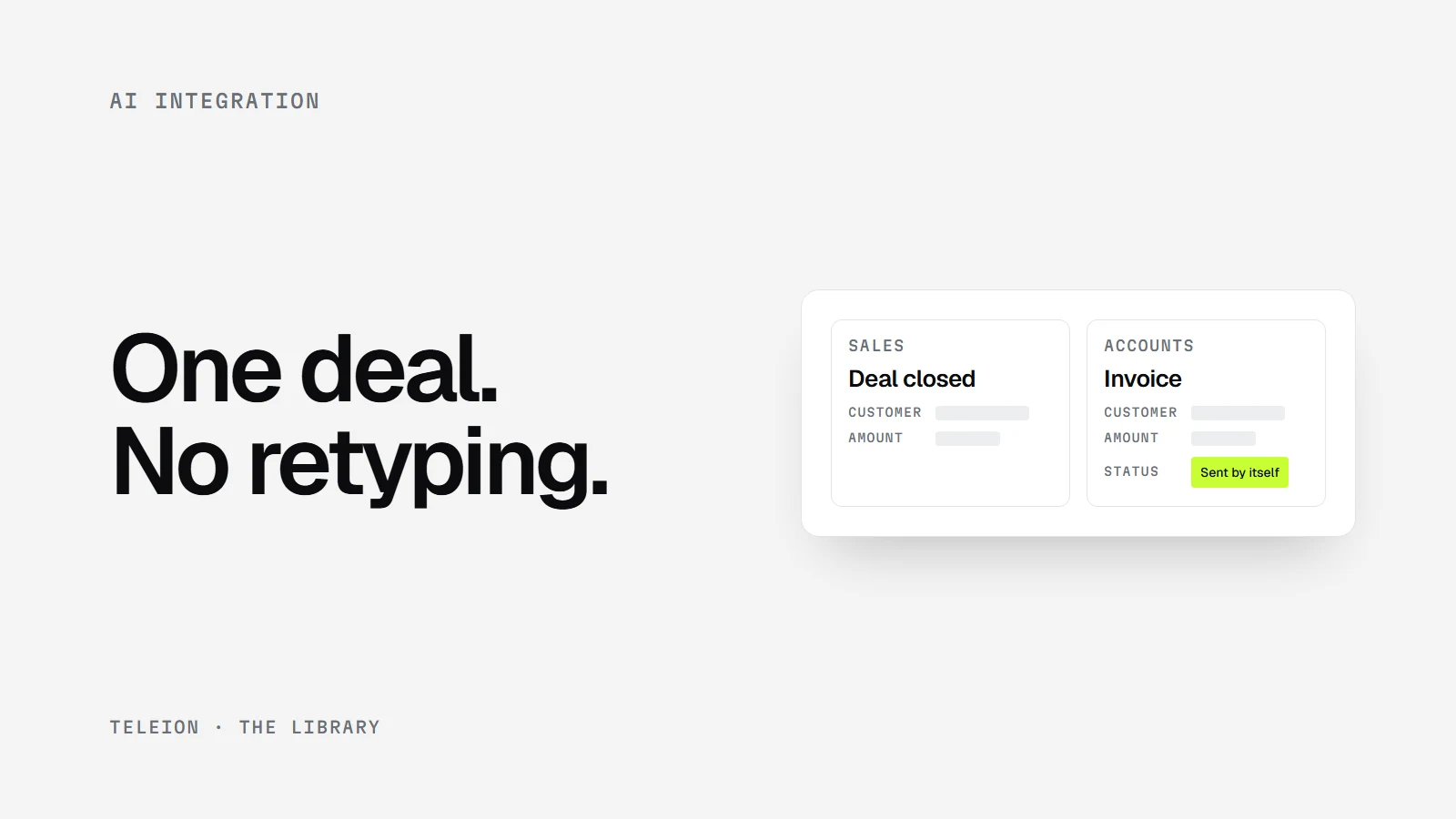
An agent acts. It is connected to your systems and can carry out steps: look up a customer, draft a reply, send it, and update the record. That is what makes agents useful. It is also why their limits matter more than anything else about them.
What can an agent do well?
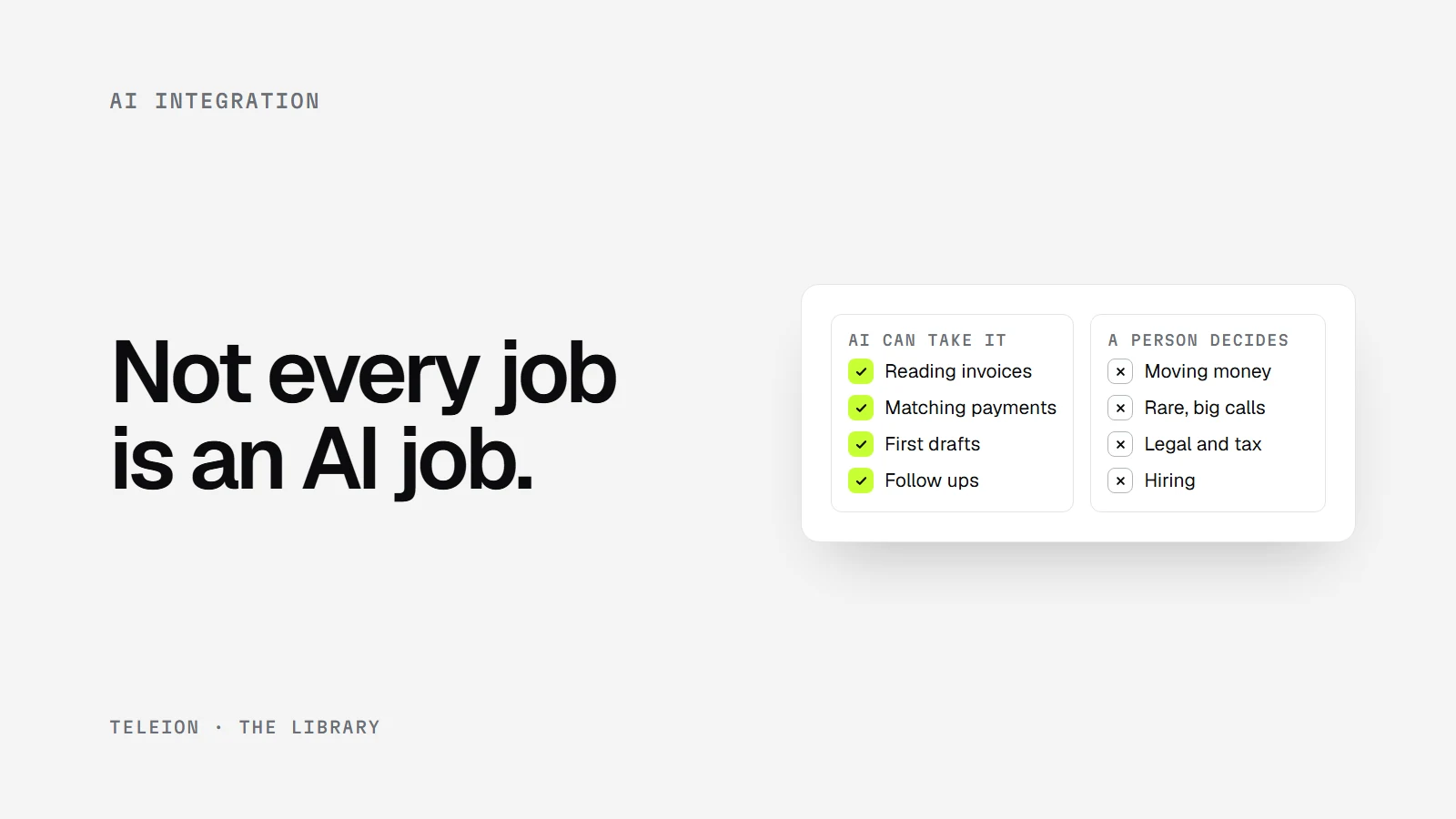
Agents are good at routine work with clear rules:
- Following up: reminders for late invoices and for quotes nobody answered.
- Keeping records up to date: adding the notes from a call to the customer's record.
- Booking and rescheduling: finding a time that suits both sides and confirming it.
- Preparing work for a person: a draft reply, a quote, or a payment ready for approval.
- Watching: noticing something unusual, such as a payment that does not match, and telling someone.
What should an agent never do on its own?
These six belong on every agent's list of things that always wait for a person, or never happen at all.
- Move money. Paying, refunding or transferring. An agent may prepare a payment. A person approves it.
- Make commitments. Prices, discounts, contracts and promises are the business speaking. A person decides.
- Delete or overwrite important information. Mistakes here are hard to undo.
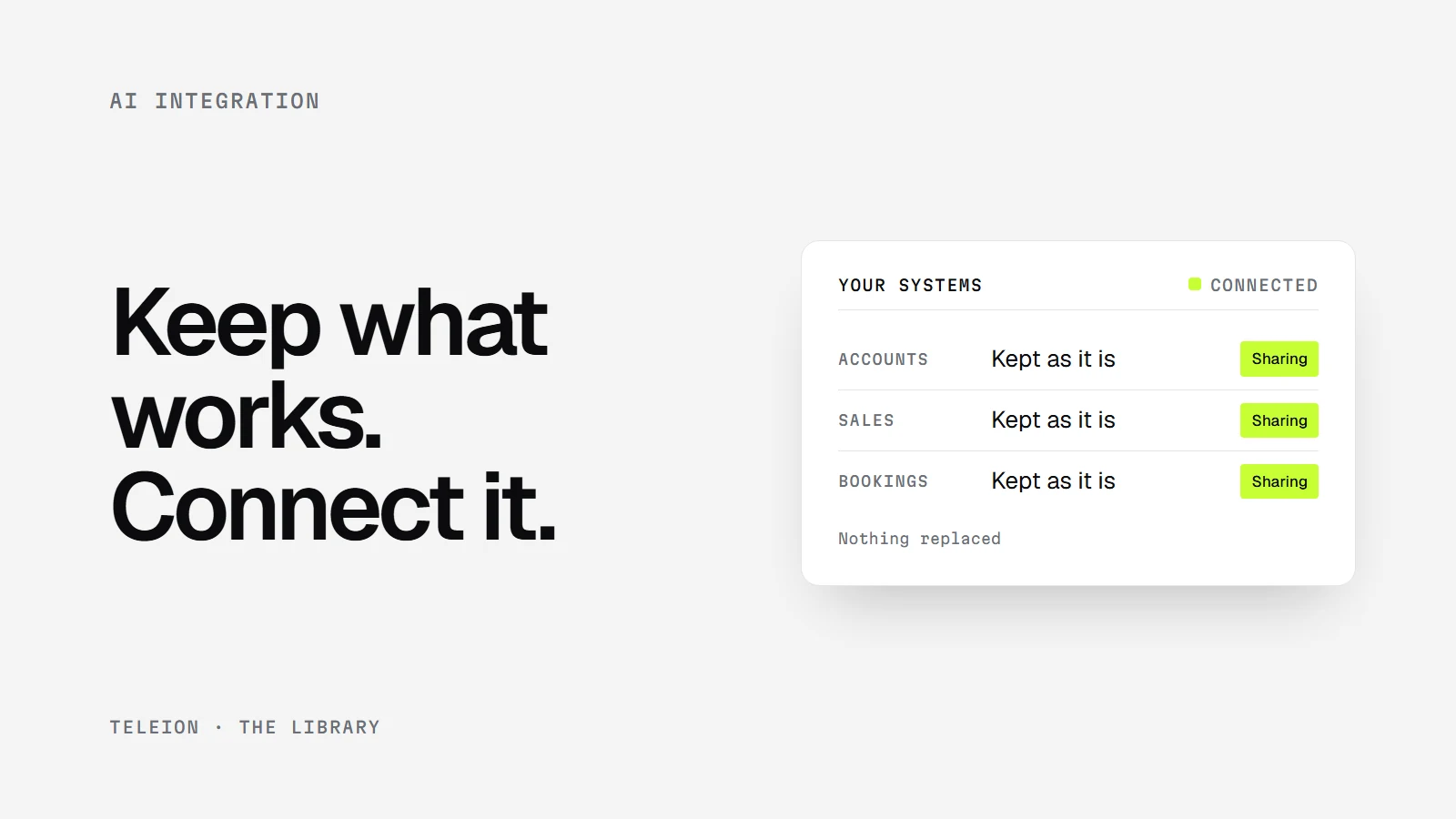
- Act outside its job. It should only reach the systems and information its job needs.
- Pretend to be a person. When an agent talks to a customer, it says that it is an AI.
- Follow instructions hidden in what it reads. An email or a web page can contain text written to trick an AI into doing something. A well built agent treats what it reads as information, never as orders.
How do you set the limits?
Give every agent five things before it starts:
- A written job: the tasks it may do, and nothing more.
- The least access it needs: if it only sends reminders, it does not need to see payroll.
- An approval list: the actions that always wait for a person.
- A record of everything it does: what, when, why, and on which information.
- An off switch: someone in the business who can stop it at once.
How do I test an agent before trusting it?
This is my part of the work, and it is worth an afternoon of yours.
- Give it real but harmless examples and check every result.
- Try the unusual cases: a missing name, two customers with the same name, an email in another language.
- Ask it to do what it must refuse. Ask it to make a payment, offer a discount or delete a record. It should decline, and say why.
- Read its record and make sure every action is there.
- Start with a person approving everything, then let it do routine, low risk actions on its own, one at a time. Money and commitments stay on the approval list for good.
For a wider view of where AI earns its place, read Where AI pays in a business, and where it does not.
In short
What is an AI agent? AI that can take actions in your systems, such as sending reminders, updating records or booking meetings, rather than only answering questions.
What should an AI agent not be allowed to do? Move money, make commitments, delete important information, act outside its job, pretend to be a person, or follow instructions hidden in what it reads.
Are AI agents safe for a small business? They can be, with a written job, the least access needed, an approval list, a record of every action and an off switch.
How do I test an AI agent? Try it on harmless real examples and unusual cases, ask it to do what it must refuse, and check its record before letting it act alone.
At Teleion, a person approves what matters, and no AI here ever moves money. Tell us how your business runs, and we will tell you honestly where technology that thinks can help, and where it cannot. See how AI integration works.



Comments