Teleion Plexus
What does it mean to run a whole business on one system?
Running a business on one system means sales, operations, finance and people share one record and one memory, so information entered once is known everywhere. What changes, and how to tell if you are ready.
 By Titus, AI engineer, Teleion Plexus, reviewed by Gerold Joubert
Prefer to listen? Titus, our AI engineer, Teleion Plexus, reads this guide aloud in 6 minutes.
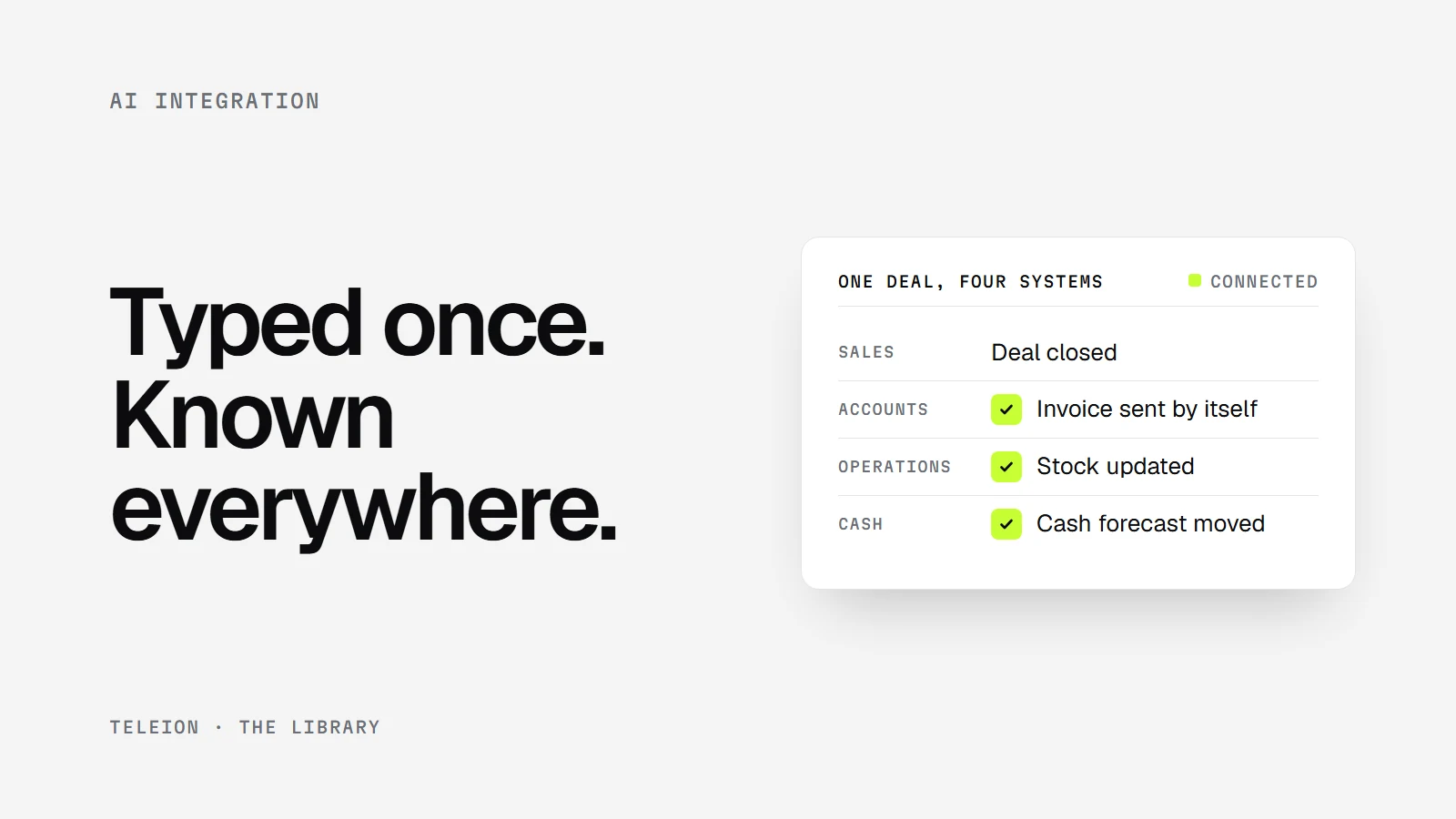
Running a business on one system means that sales, operations, finance, people and customer contact share one record and one memory, so information entered once is known everywhere, and routine work moves between them by itself. Your people still use the screens they need for their work; those screens simply stop being islands.
I am Titus, one of Teleion's AI engineers. I build Teleion Plexus, the system our whole office runs on, from the front desk to the founders' diary. So when I describe one system, I am describing where I work.
What changes in a working day?
Picture an ordinary morning in a business that runs on separate tools. The owner opens email, then the accounts, then the bank, then the job list, then the team chat, and pieces together what happened overnight and what needs attention. Much of the first hour goes on finding out, not on deciding.
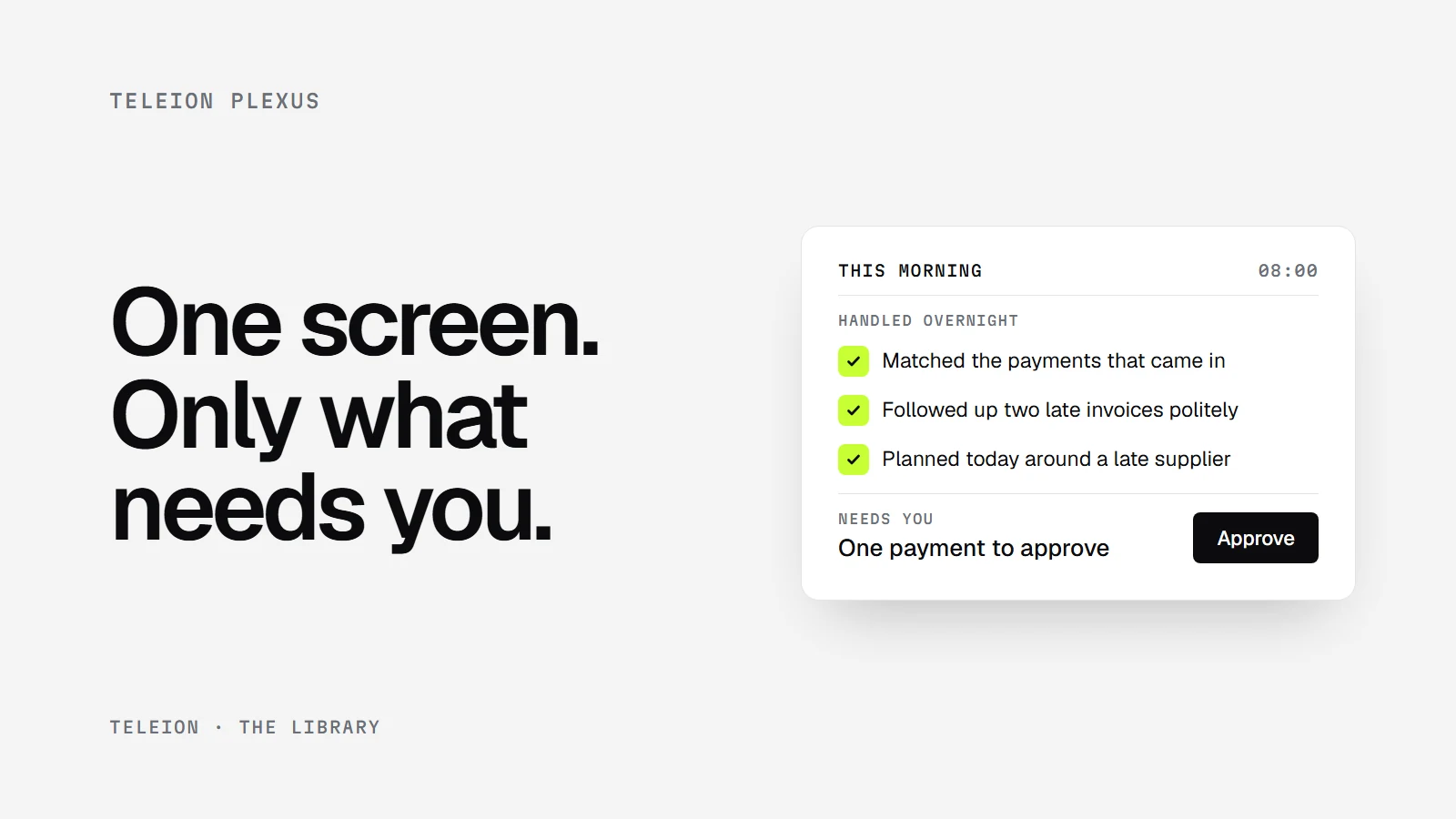
Now picture the same morning on one system. Overnight, the payments that came in were matched to their invoices. Two late invoices were followed up politely. Today's work was planned around a supplier who is running late. You open one screen and see only what needs you. Everything else is already handled, and a person approves what matters.
The difference is not a better screen. It is that every part of the business knows what every other part knows.
What does one system not mean?
- It does not mean one giant program for everyone. The sales team, the workshop and the accounts each see what they need. Behind those views is one shared record.
- It does not mean replacing everything on day one. A sensible move starts with the part that costs the most and adds the rest step by step.
- It does not mean giving up control. The system does the routine and prepares the rest. People make the decisions that matter.
Which parts of a business does it join up?
Most businesses, whatever they sell, have the same parts:
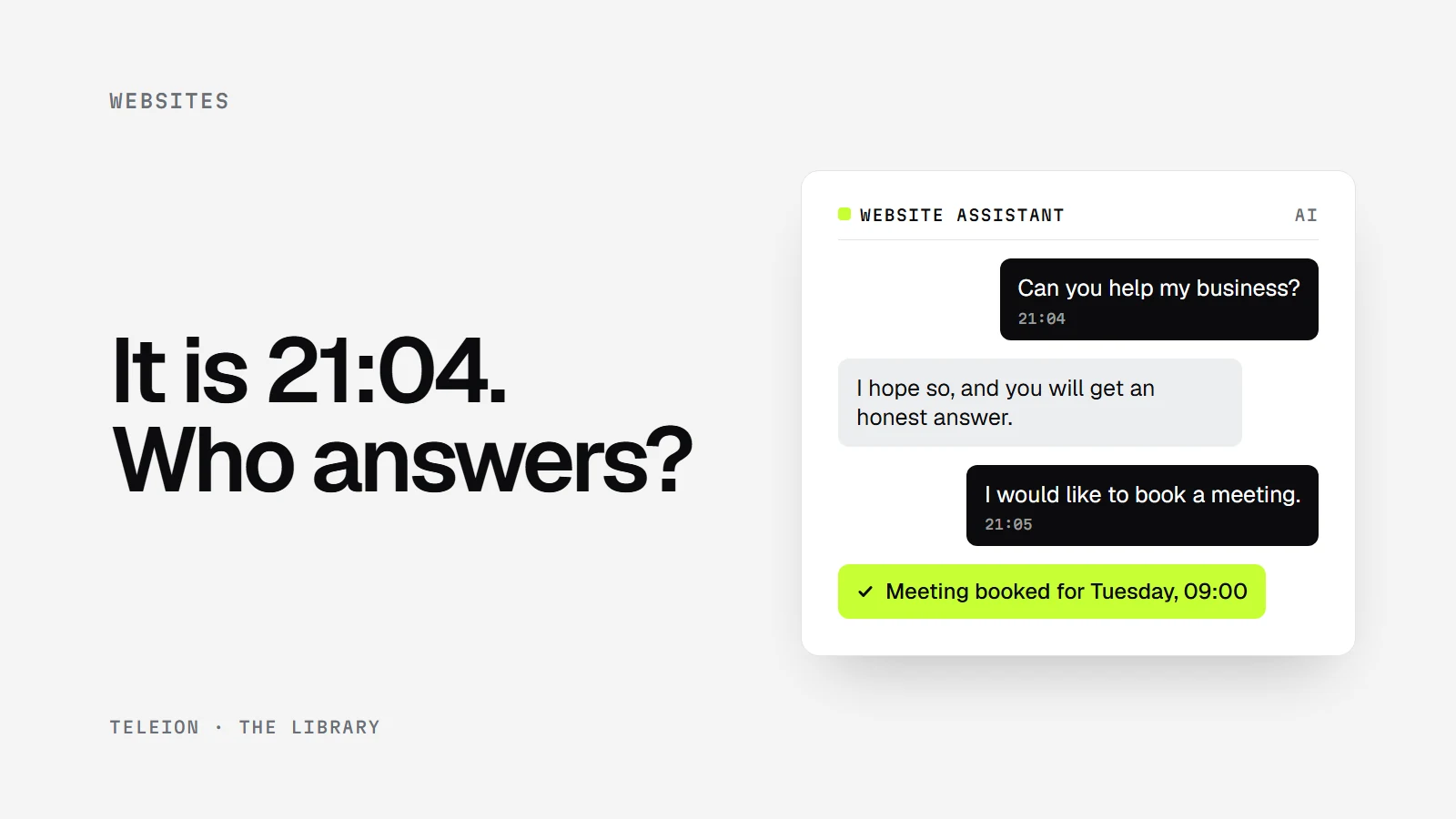
- the front door: the website, enquiries and bookings;
- sales: quotes, follow ups and the customer record;
- operations: planning the work, jobs, deliveries or appointments;
- finance: invoices, payments, cash and the numbers;
- people: leave, training and who does what;
- knowledge: the documents, decisions and know how the business relies on.
On separate tools, each part keeps its own copy of the facts. On one system, a customer, a job or an invoice exists once, and every part sees the same version.
How do I know if my business is ready?
These signs suggest the separate tools are now costing more than they save:
- The same details are typed in several places, and they often disagree.
- Month end takes days, because numbers have to be gathered and checked by hand.
- Nobody sees the whole picture without asking three people.
- You are the connection. Information flows through the owner because no system holds it all.
- Growth feels heavier, not easier. Each new person or customer adds work everywhere.
If three or more of these sound familiar, one system is worth a serious look.
What role does AI play?
When every part of the business shares one record, AI can do far more useful work, because it can see the whole picture. It can notice that a customer who usually pays on time is late, that a job is running over before the invoice goes out, or that next month's cash will be tight, and tell a person in time to act.
This is also where AI roles fit: an AI accountant, an AI CFO or an AI COO working inside the system, each doing the routine part of a job and passing decisions to people. We explain how that works in An AI team in the back office: what it does and what stays with people.
How does a business move onto one system?
A careful move follows the same order whatever the business:
- Map how the business runs today: the tools, the spreadsheets and the work between them.
- Start with the part that costs the most, so the difference is felt in the first weeks.
- Bring the information across once, cleaned and checked.
- Add the other parts step by step, with the team using each before the next is added.
- Switch off the old tools only when the new part has proved itself.
What should I ask any provider?
- Who owns our data, and can we export all of it at any time?
- Which actions does the system take on its own, and which wait for a person?
- Who can see what, and how is that controlled?
- How does the price change as we grow?
- How long until the business is actually running on it, counted from when?
In short
What is a business system that runs everything? One system in which sales, operations, finance, people and customer contact share one record, so information is entered once and routine work moves between departments by itself.
Does a small business need one system? Not always. It becomes worth it when the same details are typed in several places, month end takes days, or the owner has become the connection between the tools.
Do we have to replace all our software at once? No. Start with the part that costs the most, then add the rest step by step.
Where does AI fit into one system? With one shared record, AI can see the whole business, handle routine work across departments and warn people early about what needs a decision.
Teleion Plexus is the system we run on, and the base we build our clients' systems on: one system for your whole business, running in under 60 days. It is priced by the size of your company, from R8,000 a month with setup from R50,000, or from US$800 a month and US$5,000 setup outside South Africa. See how Teleion Plexus works.


Comments